
Starting August 12, 2026, the EU Packaging and Packaging Waste Regulation (PPWR) will grade all packaging on a recyclability scale from A to E. Only packaging achieving grades A, B, or C will remain commercially viable past 2030. For VFFS (vertical form-fill-seal) packaging lines, this means the films your machine can process — and the seals it produces — directly determine whether your customers’ products stay on European shelves.
Understanding PPWR Recyclability Grading
Not sure which vffs packaging machine fits your needs? Get a personalized recommendation in 60 seconds.
Find the Right VFFS Machine →How Recyclability Is Measured
The PPWR uses a grading methodology based on the recyclability performance of packaging materials in real-world collection and recycling systems across the EU. The assessment considers:
| Factor | What It Measures | Weight |
|---|---|---|
| Material separability | Can layers be separated during recycling? | High |
| Compatibility with existing recycling streams | Does the material fit current sorting infrastructure? | High |
| Contamination risk | Does the packaging contaminate recycling batches? | Medium |
| Recycled content potential | Can the material be recycled into usable feedstock? | Medium |
Grade Definitions
| Grade | Recyclability | Market Status | Examples |
|---|---|---|---|
| A | ≥95% recyclable | Fully compliant | Mono-PE, mono-PP films |
| B | 80–94% recyclable | Fully compliant | Single-polymer laminates |
| C | 70–79% recyclable | Compliant (review 2035) | Some bio-based films |
| D | 50–69% recyclable | Phase-out 2030 | Multi-layer PET/PE |
| E | <50% recyclable | Banned 2030 | PET/PE/AL, PVC-based |
Source: EU Commission — PPWR Overview
The Problem: Multi-Layer Films on VFFS Machines
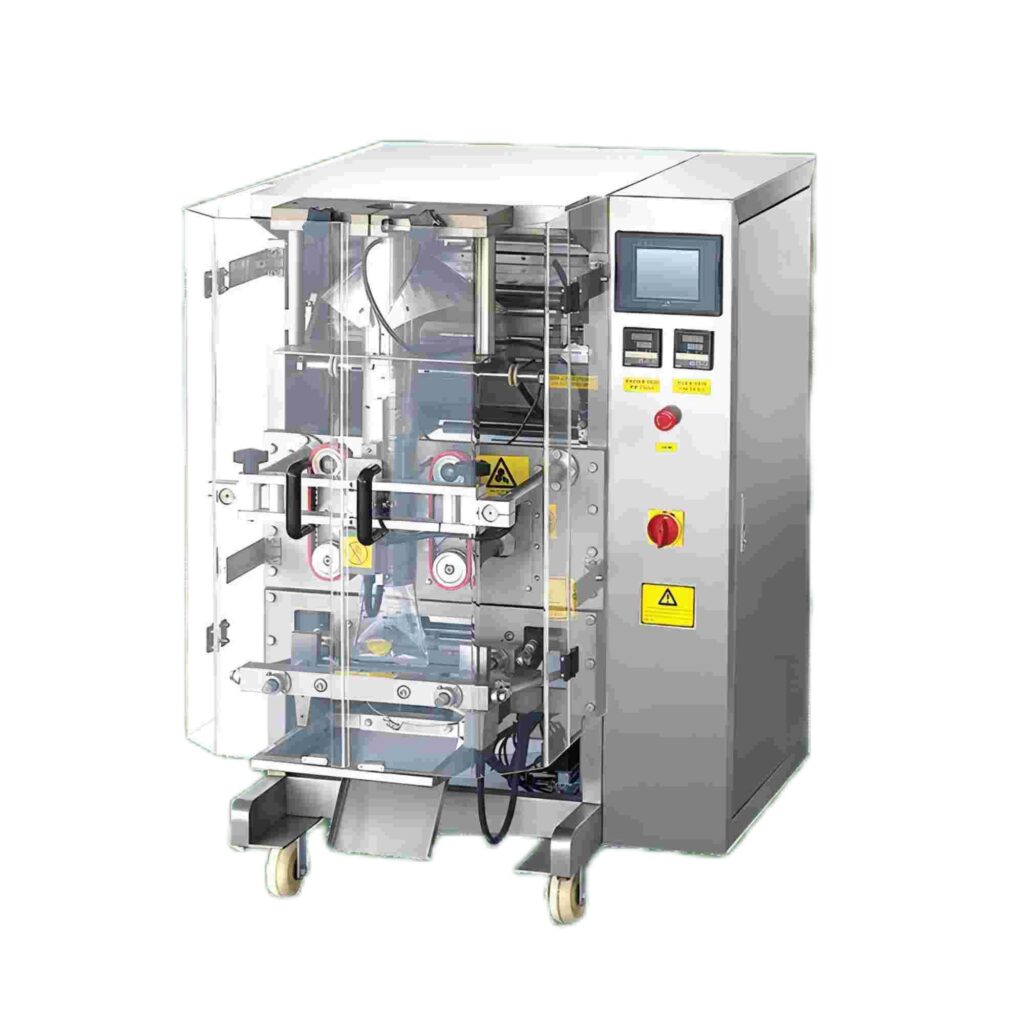
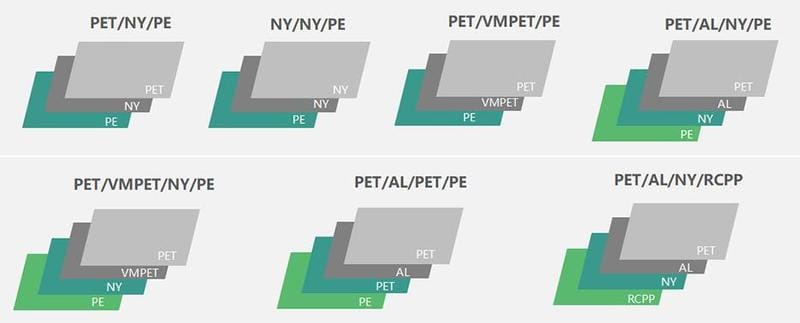
Most VFFS machines in operation today are configured for multi-layer flexible films — typically combinations of PET (polyester), PE (polyethylene), and AL (aluminum foil). These structures provide excellent barrier properties:
- PET provides mechanical strength and printability
- AL provides oxygen and moisture barrier
- PE provides heat-sealability
However, multi-layer films are fundamentally non-recyclable in standard municipal systems because the layers cannot be separated economically. Under PPWR grading, PET/PE/AL laminates typically score Grade D or E.
Current VFFS Film Landscape
| Film Type | Structure | PPWR Grade (est.) | Current Market Share |
|---|---|---|---|
| Mono-PE | PE only | A | ~15% |
| Mono-PP | PP only | A | ~10% |
| PE/PE laminate | PE + PE | A–B | ~8% |
| OPP/PE | Polypropylene + PE | D | ~25% |
| PET/PE | Polyester + PE | D | ~20% |
| PET/AL/PE | Polyester + foil + PE | E | ~15% |
| Paper/PE | Paper + PE coating | C–D | ~7% |
The gap is clear: roughly 60% of current VFFS film usage faces D or E grades under PPWR.
The Solution: Mono-Material Film Processing
What Are Mono-Material Films?
Mono-material films are made from a single polymer type throughout the entire structure. The two most relevant for VFFS packaging are:
- Mono-PE (Polyethylene): Available in LDPE, LLDPE, and mLLDPE variants. Fully recyclable in PE streams. Seal temperature range: 110–160°C.
- Mono-PP (Polypropylene): Available in OPP, CPP, and BOPP variants. Fully recyclable in PP streams. Seal temperature range: 130–170°C.
The challenge is achieving adequate barrier properties without adding a second polymer or aluminum layer. Modern solutions include:
- Thin EVOH coatings (ethylene vinyl alcohol) at <5% of total weight — maintain Grade A recyclability
- SiO_x and AlOx vacuum deposition — nanometer-thick barrier layers that do not affect recyclability classification
- Bio-based barrier coatings — water-based solutions like Actega ACTGreen that comply with PPWR while providing O₂ and moisture barriers
VFFS Machine Requirements for Mono-Material Processing
Processing mono-material films on a VFFS machine requires attention to three critical subsystems:
1. Sealing System
| Sealing Method | Mono-PE | Mono-PP | Multi-layer | Recommendation |
|---|---|---|---|---|
| Constant heat (impulse) | ✅ Good | ✅ Good | ✅ Good | Existing standard |
| Heated jaw sealing | ⚠️ Moderate | ✅ Good | ✅ Good | May need temp adjustment |
| Ultrasonic sealing | ✅ Excellent | ✅ Excellent | ✅ Good | Best for thin mono-materials |
| Band sealing | ✅ Good | ⚠️ Moderate | ✅ Good | High-speed applications |
Key insight: Ultrasonic sealing generates heat within the film itself rather than applying external heat. This makes it particularly effective for thin mono-material films (15–30 μm) that traditional heat sealers may melt or distort.
2. Film Tension Control
Mono-material films are generally softer and more elastic than multi-layer laminates. VFFS machines need:
- Precision tension controllers with ±0.5 N accuracy
- Dancer roller systems rather than fixed brake systems
- Adjustable draw-down belts to prevent film stretching during forming
3. Forming Collar Compatibility
The forming collar shapes the flat film into a tube. Mono-PE films in particular require:
- Polished stainless steel or coated aluminum collars (Ra ≤ 0.4 μm surface finish)
- Adjustable forming angles to accommodate different film stiffnesses
- Anti-static systems to prevent film sticking on the collar surface
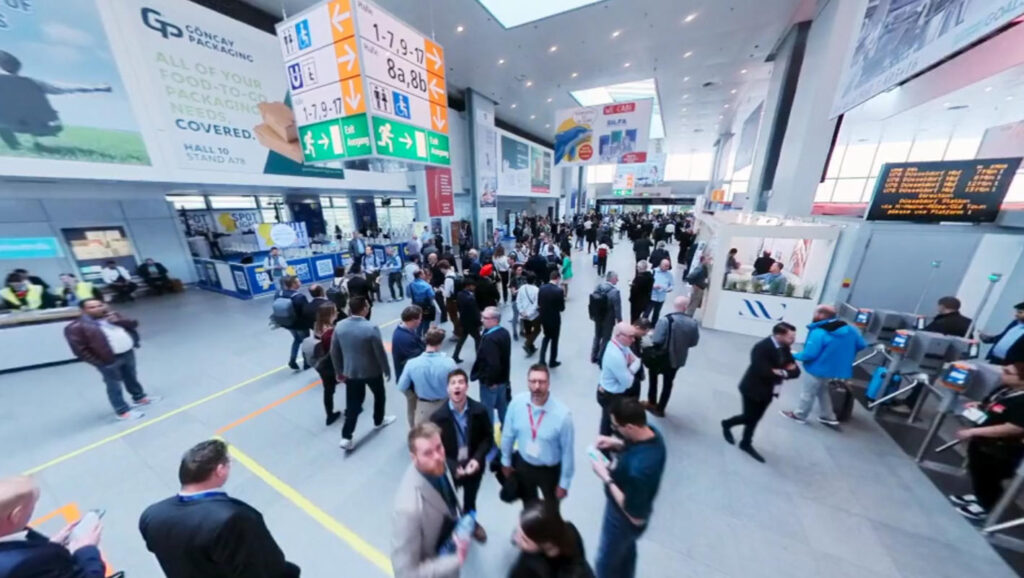
Real Examples from Interpack 2026
Several manufacturers demonstrated PPWR-compliant VFFS solutions at Interpack 2026:
Lintyco Sustainable VFFS Platform
Lintyco Packaging Machinery presented its sustainable-ready VFFS solution designed for recyclable mono-material packaging applications. The system supports PE and PP film structures while maintaining stable sealing performance on lightweight films down to 20 μm.
The platform integrates servo-driven film transport and intelligent temperature control, helping reduce film waste during changeovers by approximately 10–15% compared with conventional pneumatic systems. Lintyco also highlighted energy-efficient motion control designed to lower compressed air consumption and improve overall operational stability for mid-sized food manufacturers transitioning toward PPWR-compliant packaging.
Syntegon SVX Platform
Syntegon (Hall 6/B31) presented the SVX VFFS machine capable of reducing film usage by up to 50% while maintaining seal integrity. The SVX handles mono-material PE and PP films with thicknesses down to 15 μm, paired with an AI-driven self-adjusting system that optimizes sealing parameters in real time.
TNA robag Quantum
TNA (Hall 14/C56) launched the robag Quantum, achieving speeds up to 300 bags/minute per tube on sustainable film structures. The machine is designed specifically for mono-material compatibility with rapid changeover between PE and PP formats.
ULMA VTC 840 WD
ULMA Packaging (Hall 5/5C23) showcased the VTC 840 WD vertical bag machine with 20% reduction in electrical consumption and 30% reduction in pneumatic consumption, designed to handle both traditional and mono-material films.
Source: Packaging Europe — Interpack 2026 Coverage
Film Thickness and Its Impact on PPWR Scoring
Thinner films score better on PPWR recyclability assessments because they:
- Use less raw material per package
- Require less energy to recycle
- Contaminate recycling streams less when multilayer
- Align with PPWR’s waste reduction objectives (max 40% empty space rule)
| Film Type | Typical Thickness | PPWR-Friendly Thickness | Material Reduction |
|---|---|---|---|
| Mono-PE pouch | 80–120 μm | 40–60 μm | 40–50% |
| Mono-PP pouch | 60–90 μm | 30–50 μm | 40–50% |
| Compostable PLA | 40–60 μm | 25–40 μm | 30–40% |
Compostable Film Requirements Under PPWR
The PPWR mandates compostable packaging for specific product categories:
| Product Category | Compostability Requirement | Timeline |
|---|---|---|
| Tea bags | Must be compostable | August 2026 |
| Coffee pouches (single-serve) | Must be compostable | August 2026 |
| Fruit and vegetable stickers | Must be compostable | August 2026 |
| Very lightweight bags (<15 μm) | Must be compostable | August 2026 |
VFFS machines processing these products must handle compostable PLA, PBAT, or cellulose-based films. These materials have different sealing characteristics:
| Film Material | Seal Temp Range | Seal Strength | Compatibility |
|---|---|---|---|
| PLA | 80–110°C | Moderate | Requires precise temp control |
| PBAT blends | 90–130°C | Good | Similar to PE processing |
| Cellulose-based | 100–140°C | Variable | May need adhesive sealing |
Frequently Asked Questions
Can My Current VFFS Machine Process Mono-Material Films?
Most VFFS machines manufactured after 2018 can process mono-PE and mono-PP films with minor adjustments to sealing temperature, pressure, and dwell time. Machines older than 2018 may require sealing jaw upgrades or tension controller modifications. Request a material compatibility test from your supplier — Lintyco offers this assessment at no charge.
What Is the Minimum Film Thickness a VFFS Machine Can Handle?
This depends on the machine’s sealing technology and film transport system. Modern machines with servo-driven film pulls and ultrasonic sealers can reliably process films down to 15 μm. Older machines with mechanical pulls typically have a practical minimum of 30–40 μm. Thinner films require more precise tension control and softer sealing profiles.
Do Mono-Material Films Cost More Than Multi-Layer Films?
Mono-material films currently cost 10–20% more per kilogram than comparable multi-layer laminates due to lower production volumes. However, because mono-material films can be run at thinner gauges, the cost per package is often similar or lower. A 50 μm mono-PE pouch can replace an 80 μm PET/PE laminate at comparable or lower material cost per unit.
How Do I Know If My Packaging Achieves PPWR Grade A?
Recyclability grading requires testing by an accredited laboratory following the PPWR methodology. Organizations like RecyClass provide recyclability assessment protocols aligned with PPWR criteria. In practice, mono-PE and mono-PP films without incompatible additives typically achieve Grade A.
What Happens to Packaging That Scores Grade D or E After 2030?
Packaging graded D or E cannot be placed on the EU market after 2030. Companies that continue using non-compliant packaging face enforcement actions including product withdrawal and fines. The exact penalty framework is determined by individual member states but can reach up to 4% of annual EU turnover for the product category.
Find the Right VFFS Machine
Get a personalized recommendation tailored to your product and production target.
- ✓ Machine type for your vffs product
- ✓ Packaging format (pouch, sachet, bag)
- ✓ Production capacity match
- ✓ Optional configurations + auxiliary equipment
Conclusion
The PPWR recyclability grading system creates a clear technical standard that packaging machinery must meet. For VFFS equipment buyers, the priority is straightforward: verify that your machine can process mono-material PE or PP films at commercially viable speeds and film thicknesses.
If you are evaluating VFFS equipment for the European market, Lintyco’s range of packaging machines includes models specifically configured for mono-material and compostable film processing.
📧 Email: [email protected]
💬 WhatsApp: +86 15958746272
🌐 Explore PPWR-ready VFFS machines →



 English
  Spanish
  Russian
  Korean
  French
  German
  Italian
  Arabic
  Thai
Thai  Chinese
  Vietnamese
  Japanese
  Portuguese
  Dutch
Dutch  Malay
Malay