
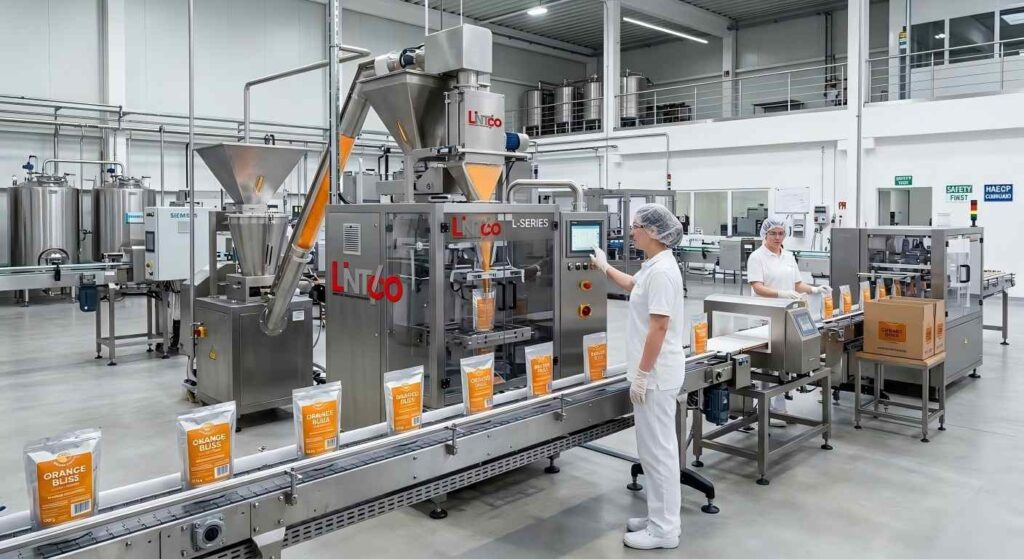
Why Juice Powder Packaging Matters More Than You Think
Not sure which powder packaging machine fits your needs? Get a personalized recommendation in 60 seconds.
Find the Right Powder Machine →The instant fruit juice powder market hit $16.5 billion in 2023. By 2032, it’s headed for $34.4 billion — a 7.2% CAGR that isn’t slowing down anytime soon.
That’s not a niche trend. That’s a massive, growing window of opportunity for your brand.
But here’s the thing most brand owners miss: the product inside the pouch isn’t the only thing that sells. The package does just as much heavy lifting. A leaky seal, a clumpy powder, an inconsistent fill weight — any one of those can tank a 5-star product’s reputation overnight.
I’ve seen it happen. A great-tasting juice powder brand loses a retail listing because their sachets kept bursting during shipping. Not a formulation problem. A packaging problem.
So whether you’re launching your first SKU or scaling to a multi-lane production line, choosing the right juice powder packing solution is one of the most important decisions you’ll make. Let’s break it down.
How Many Types of Juice Powder Packaging Machines ?
Not all packing machines are built the same — and not all of them will fit your situation. Here’s what’s actually on the table.
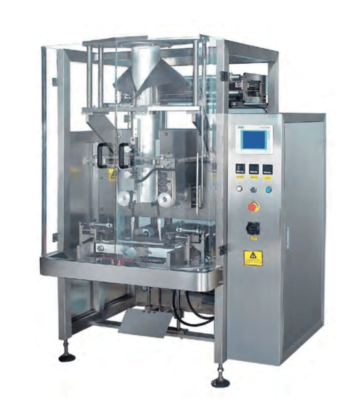
Vertical Form Fill Seal (VFFS) Machines
VFFS machines are the workhorses of the powder packaging world. They take a flat roll of film, form it into a bag, fill it with powder, and seal it — all in one continuous motion.
Fast. Flexible. Great for stand-up pouches, pillow bags, and gusseted formats.
If you’re producing at scale and need consistent fill accuracy, a VFFS line is usually where brands land. Lintyco’s VFFS machines can handle a wide range of powder characteristics, including the notoriously tricky hygroscopic (moisture-absorbing) juice powders.
Small Juice Packing Machines
Starting out? Running a pilot batch? Don’t let anyone tell you that you need a $100K line on day one.
Small juice packing machines in the $5,000–$25,000 range can handle 200–1,000 units per hour — more than enough for DTC brands, foodservice sampling, or regional retail launches.
Low upfront cost. Easy to operate. And when you’re ready to scale, these machines often integrate into larger automated lines.
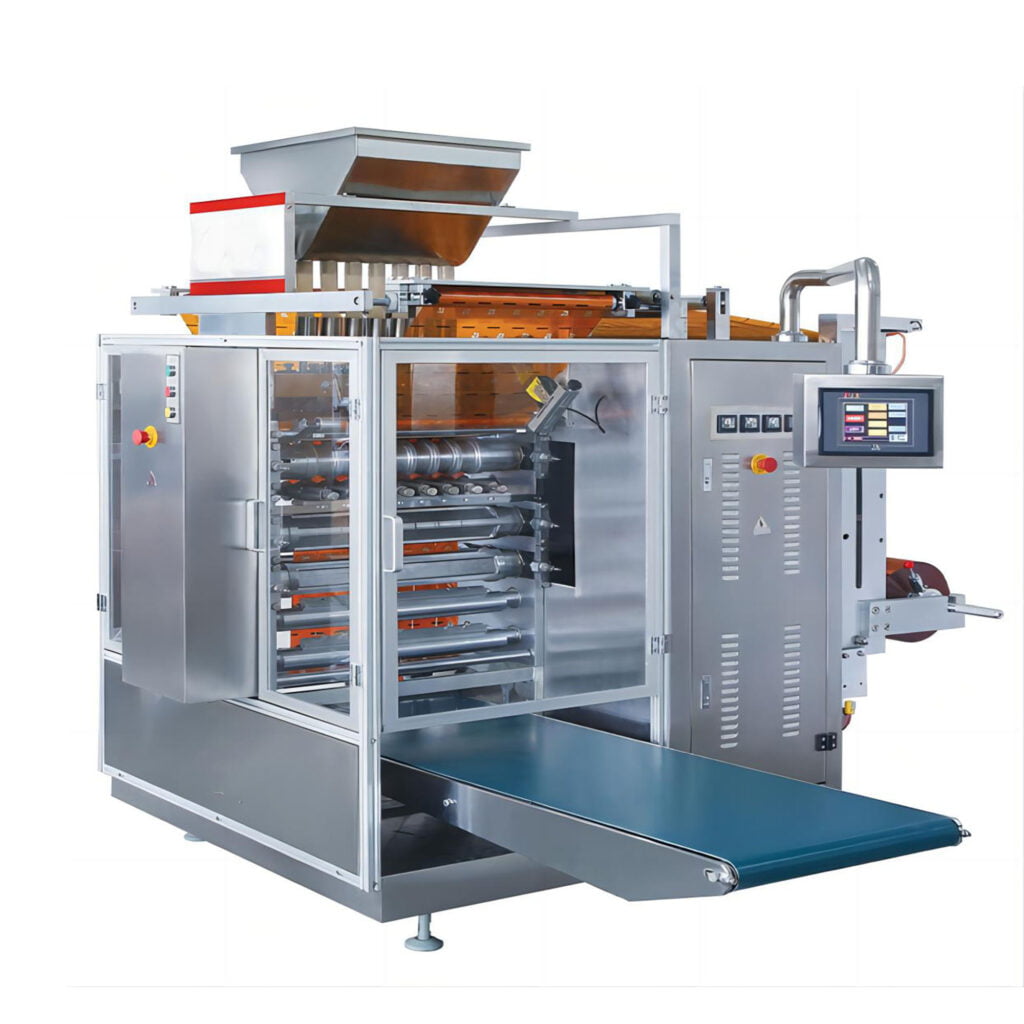
Multi-Lane Sachet Machines
Want to produce multiple flavors simultaneously, or maximize output in a tight floor space?
Multi-lane sachet machines run several packing lanes in parallel. You get higher throughput without doubling your footprint. Ideal for brands with a wide SKU range — think 10 flavors, all shipping in the same week.
Check out sachet packing machines if this sounds like your setup.
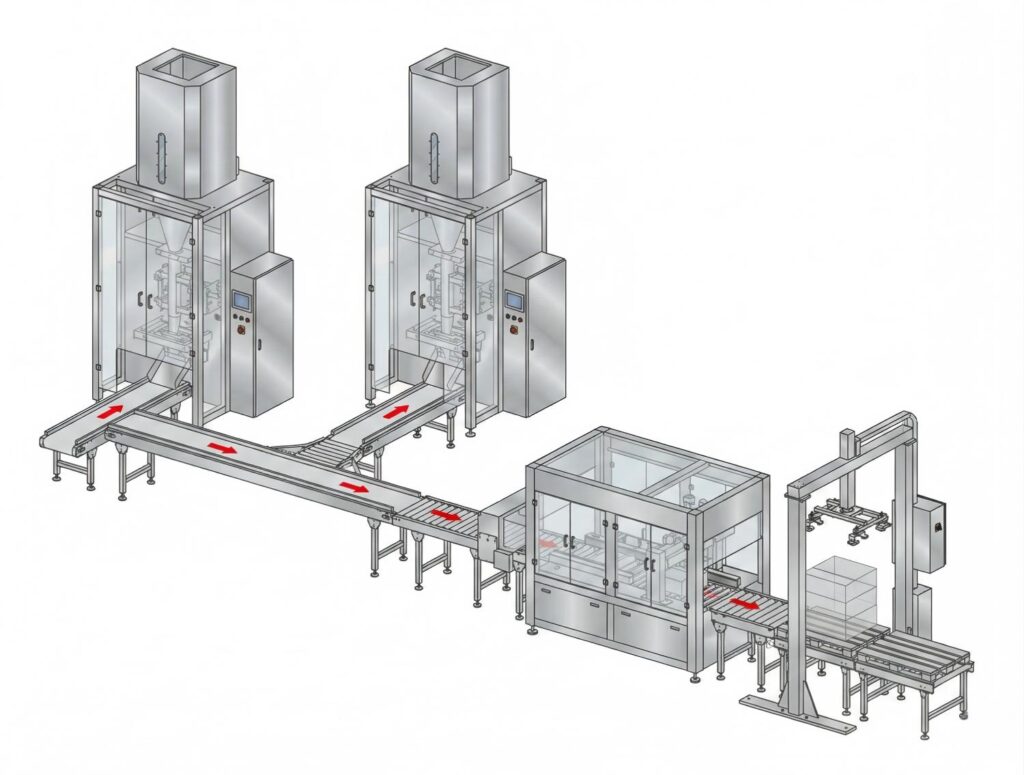
Custom Juice Powder Packing Lines
This is the full picture — raw material handling, powder conveying, filling, sealing, coding, cartoning, case packing, all connected into one automated line.
One brand I know came in producing 400 pouches an hour with 8 operators. After installing a full automated line, they were at 1,600 pouches per hour with just 2 operators. Packaging waste dropped from 30% to under 5%.
That’s what a well-integrated custom juice packing line does. It doesn’t just speed things up — it transforms your entire operation.
Which Factors to Consider When Choosing a Machine?
Okay, so you know what’s out there. Now how do you actually pick?
Here’s what I always tell brand managers who are evaluating machines for the first time: don’t start with the machine specs. Start with your numbers.
Production Volume — Get Honest About This
This is where most people undersell themselves or overcorrect.
Here’s a simple rule of thumb:
| Your Output Need | Recommended Machine Type | Price Range | Typical ROI Period |
|---|---|---|---|
| Under 1,000 units/hr | Semi-Auto / Small Sachet Machine | $5K–$25K | 18–36 months |
| 1,000–10,000 units/hr | VFFS / Automated Line | $30K–$90K | 12–24 months |
| 10,000+ units/hr | Custom Full Packing Line | $120K+ | 9–18 months |
The math shifts dramatically once you cross 1,000 units per hour. At that point, automation starts reducing labor costs by 60–80% and speeds up output by 5–10x compared to semi-manual processes.
Bag Types & Formats

Do you need pillow bags? Flat-bottom stand-up pouches? Single-serve sachets? 4-side seals?
Each format requires different tooling. Know your retail channel first — a DTC brand ships differently than a grocery chain endcap.
Powder Characteristics — Don’t Skip This One
Juice powder is notoriously hygroscopic. It loves absorbing moisture.
That means your machine needs to handle clumping-prone materials without jamming the auger filler. It also means your film choice matters — aluminum foil laminates with nitrogen flushing are the gold standard for moisture-sensitive powders.
If you skip this step, no amount of beautiful packaging design will save you from customer complaints about lumpy, degraded powder.
Automation Level
Do you need automatic date coding? Checkweigher integration? Vision system for seal inspection? Automatic case packing downstream?
These aren’t luxury add-ons anymore. They’re the difference between a line that runs at 90% efficiency and one that’s constantly paused for human checks.
Budget & ROI — Think Long Term
A $15,000 semi-auto machine looks attractive at first. But if it costs you $8,000/month in extra labor and produces 30% packaging waste, you’ve paid for a full automated line in losses within 18 months.
Calculate your real cost per pouch — including labor, film waste, reject rate, and downtime. Then compare.
How Lintyco Can Help: Your One-Stop Juice Powder Packaging Partner
Let me be straight with you: there are a lot of machine manufacturers out there. Some are good. Some will sell you a machine that looks great in a brochure and falls apart six months later.
Lintyco is different — and not because I’m just saying that.
Here’s what actually sets them apart:
European engineering standards, mid-range pricing. You get the build quality and precision of European-style machines without the price tag that usually comes with that. For brands that are growing but not yet at “enterprise budget” scale, that’s a real advantage.
Genuine customization. Not just “we can change the bag size.” Lintyco will work with your powder’s specific flow characteristics, your bag format requirements, your line layout constraints. The solution is built around you, not around what’s easiest to manufacture.
Full line capability. From VFFS and sachet machines to complete automatic juice packing lines, Lintyco covers every stage. You don’t need five suppliers for five pieces of equipment. One point of contact. One integration. Way less headache.
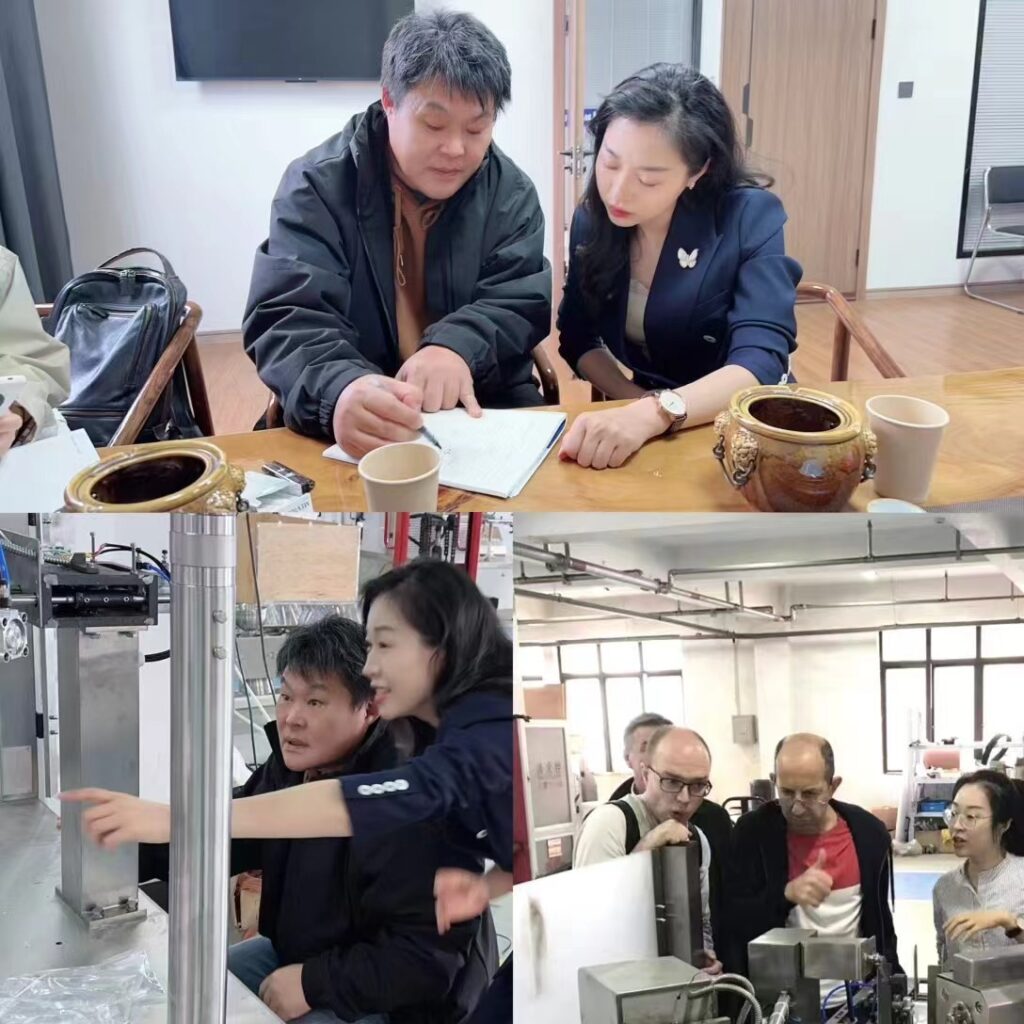
One client — a mid-size beverage brand — came to Lintyco with a manual sachet line running 400 bags per hour. Their waste rate was high, their labor cost was eating margin, and they were turning down retail orders because they couldn’t keep up with volume. Three months after the new line was installed, they ran at 1,600 bags per hour, with 75% less labor and packaging waste under 5%.
That’s the before and after you’re shopping for.
→ Browse Lintyco’s juice packing solutions or contact the team directly to discuss your specific setup.
Tips for Optimizing Your Juice Powder Packaging
Got your machine sorted? Good. Now let’s make sure it actually runs the way it should.
Use the right film material. For juice powder, aluminum foil laminate is your best friend. It blocks moisture, light, and oxygen. Pair it with nitrogen flushing inside the pouch, and you’ll dramatically extend shelf life. Cheap film saves you pennies now and costs you returns later.
Calibrate your fill weight regularly. Auger fillers are highly accurate — but they drift. Temperature changes, humidity, even powder lot variations can shift your mean fill weight. A 5% overfill across 100,000 pouches is a lot of free product you’re giving away.
Build a maintenance schedule and actually stick to it. I know, everyone says this. But a VFFS machine with worn sealing jaws produces inconsistent seals. And inconsistent seals produce customer complaints, product recalls, or worse — liability exposure. Monthly checks on jaw condition, film tension, and auger wear are non-negotiable.
Think about sustainability now, not later. European retail buyers are already asking about compostable or recyclable packaging films — and that pressure is moving into global markets fast. If you’re building a brand with a 5-year vision, factor in sustainable film options at the machine spec stage, because retrofitting later is expensive.
Match your machine speed to your downstream process. A machine that fills 3,000 pouches per hour is useless if your cartoning line can only handle 1,500. Map the whole flow before you spec individual machines. This is where working with a full-line partner like Lintyco pays off — they think about the whole system, not just the box they’re selling you.
Find the Right Powder Machine
Get a personalized recommendation tailored to your product and production target.
- ✓ Machine type for your powder product
- ✓ Packaging format (pouch, sachet, bag)
- ✓ Production capacity match
- ✓ Optional configurations + auxiliary equipment
The Real Question Isn’t Which Machine — It’s Which Partner
At the end of the day, choosing a juice powder packing solution isn’t really a technical decision. It’s a business decision.
The right machine at the wrong price kills your margin. The cheapest machine with the worst support kills your production schedule. And a one-size-fits-all solution that doesn’t account for your powder’s characteristics kills your product quality.
What you actually need is a partner who asks the right questions before recommending anything — someone who understands both the engineering and the commercial reality of building a beverage brand.
That’s exactly what Lintyco does.
With the global juice packaging market heading toward $5 billion by 2032, and the fruit juice powder segment growing at nearly 7% per year, the brands that win won’t just have the best formulas. They’ll have the most efficient, consistent, and scalable packaging operations.finance.yahoo+1
Don’t leave that to chance.
→ Get a free consultation with Lintyco’s packaging experts
→ Explore the full range of juice packing machines

 English
  Spanish
  Russian
  Korean
  French
  German
  Italian
  Arabic
  Thai
Thai  Chinese
  Vietnamese
  Japanese
  Portuguese
  Dutch
Dutch  Malay
Malay