
Choosing the right wine packing solution isn’t just a procurement decision — it’s a production strategy that directly impacts product quality, shelf life, and your bottom line. Whether you’re running a boutique winery, a craft brewery, or scaling up an industrial alcohol packaging line, the format and technology behind your packing line can make or break your operation.
This guide covers every major wine packing solution and beer packaging solution on the market today — from traditional glass bottle lines to flexible stand-up pouches — so you can make an informed, confident decision.
Why Wine and Beer Packing Solutions Require Different Technologies
Here’s something many buyers overlook: wine and beer are fundamentally different products from a packaging engineering standpoint. You can’t treat them the same way on the line.
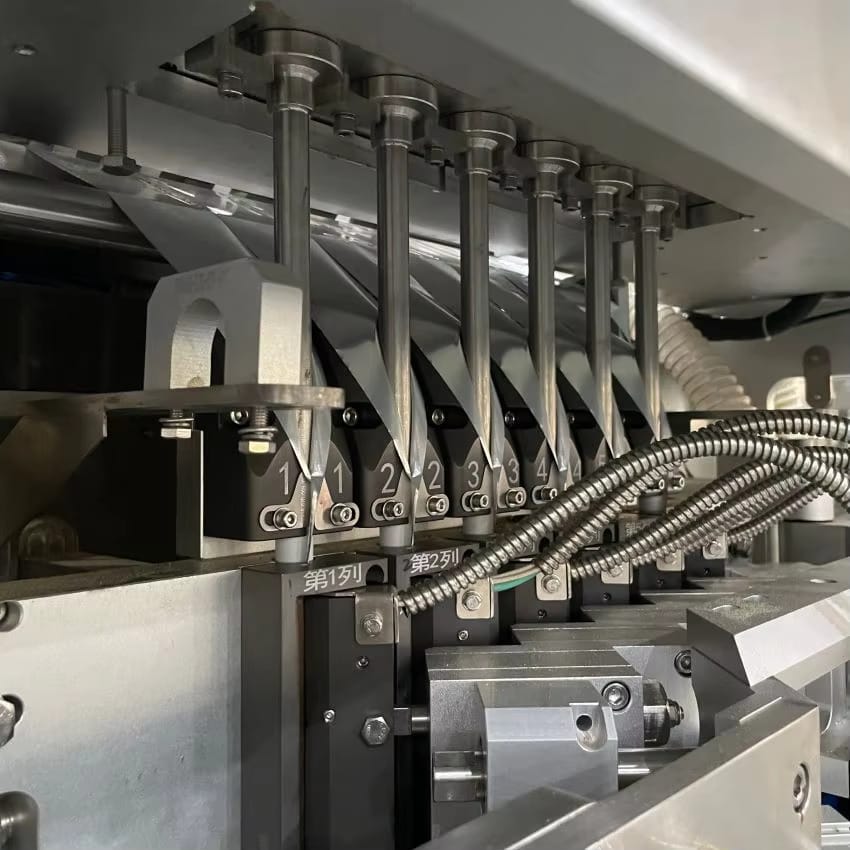
Wine is non-carbonated. It’s highly sensitive to oxygen. Even a small amount of O₂ exposure during filling can degrade the aromatics and accelerate aging. That’s why a quality wine bottling line relies on inert gas flushing (typically nitrogen or CO₂) and precision gravity or vacuum filling to keep oxygen contact to an absolute minimum.
Beer, on the other hand, is carbonated — and in the case of craft beer or lager, it’s packed with dissolved CO₂ under significant pressure. If you try to fill carbonated beer using a standard gravity filler, you’ll get foam eruption, loss of CO₂, underfilling, and potential seam failures. Carbonated beverages require isobaric filling technology: the bottle or can is pre-pressurized to match the tank before liquid enters, preventing gas escape.
The takeaway? Every decision downstream — from the filler type to the sealing method — flows from this fundamental difference between carbonated and non-carbonated products. Hygiene requirements also diverge: beer lines must support rigorous CIP (Clean-in-Place) systems to prevent contamination in malt-based environments, while wine lines prioritize sterile environments and minimal air exposure.
How Many Type of Beer Packaging Solutions ?
Beer Can Packing Solution

The beer can packing solution is the workhorse of high-volume beverage production. A complete beer can packaging line typically flows through these stages:
- Depalletizing — empty aluminum cans are mechanically unloaded and fed into the line
- Can rinsing — cans are inverted and flushed with purified water or ionized air to remove particulates
- Isobaric can filling — cans are pre-pressurized with CO₂ before liquid enters to preserve carbonation
- Nitrogen dosing — a micro-dose of liquid nitrogen is injected pre-seam to purge headspace oxygen
- Seaming — the lid is double-seamed under controlled pressure; seam integrity is critical for shelf life
- Coding and vision inspection — best-before dates, barcodes, and fill-level checks are automated
- Carton packing and palletizing — finished cans are packed into cases and stacked for dispatch
The key technical differentiator in modern beer can packaging is foam reduction technology. Excess foam before seaming is one of the primary causes of underfill and oxygen contamination. Leading lines use combination CO₂ pre-evacuation and tunnel pasteurization systems to solve this.
High-Pressure Beer Canning Technology

Not all beer canning equipment handles pressure equally. This is where craft brewers often run into problems.
Standard atmospheric filling equipment is designed for water or juice — it can’t handle the 2.5–3.0 volumes of CO₂ dissolved in most ales and lagers. High-pressure beer canning systems use isobaric filling principle: the filling head equalizes pressure between the liquid tank and the container before the valve opens. Liquid transfers based on level differential, not pressure differential, which means CO₂ stays dissolved throughout the fill.
Here’s a quick comparison:
| Filling Method | Best For | CO₂ Retention | Speed | Foam Risk |
|---|---|---|---|---|
| Gravity filling | Wine, still beverages | N/A | Medium | Low |
| Isobaric filling | Beer, carbonated drinks | High | High | Low |
| Counter-pressure | Craft beer, high CO₂ | Very High | Medium | Very Low |
For craft brewers, counter-pressure isobaric systems are worth the investment. The cost of lost carbonation — in product, rework, and brand reputation — far exceeds the equipment premium.
Beer Glass Bottle Packing Line

The beer glass bottle packing line adds a layer of complexity that the can line doesn’t face: explosion risk.
Glass bottles under carbonation pressure are dangerous if mishandled. A complete beer bottling line addresses this through:
- Bottle washer — multi-stage hot caustic wash followed by sterile water rinse
- Isobaric filler — same counter-pressure principles as can filling
- Crown capper — mechanical crimping under controlled force for consistent seal
- Labeling machine — wet glue or pressure-sensitive labeling
- Case packer — bottles are gently inserted into divider cartons to prevent breakage
Speed-vs-precision is the central trade-off on glass bottle lines. High-speed rotary fillers maximize output but require careful pressure tolerance management. Mid-speed inline systems offer more flexibility for multi-SKU craft operations.
Beer Stand-Up Pouch Packing Solution

This is where things get interesting — and where most of your competitors aren’t looking.
The beer stand-up pouch is a genuinely differentiated packaging format. It’s lightweight, break-proof, and increasingly popular for outdoor events, music festivals, and export shipments where glass weight adds logistics cost. A spouted pouch beer packaging line uses:
- Spouted pouch filling with counter-pressure heads adapted for carbonated beverages
- High-barrier aluminum laminate film to block UV light and oxygen permeation
- Modified atmosphere packaging (MAP) to preserve carbonation during shelf life
Shelf life for pouched beer typically ranges from 3–6 months under proper barrier conditions — shorter than cans, but perfectly adequate for festival-supply and short-channel retail models. If you’re serving a niche market where portability matters more than longevity, the beer stand-up pouch packing solution deserves serious evaluation.
Beer Camping Storage Bags and Bulk Liquid Bags

Beyond individual-serve formats, the market for beer camping storage bags and collapsible bulk liquid bags is growing fast — particularly in the outdoor recreation and event catering sectors.
These are typically 5L–20L collapsible bags fitted with dispensing taps, designed as a portable alternative to kegs. Key specifications to evaluate:
- Barrier material — multi-layer foil laminates for CO₂ retention
- Tap valve compatibility — push-in vs. quarter-turn systems for different dispensers
- Fill pressure tolerance — most 5L camping bags handle up to 1.5 bar working pressure
- Thermal stability — important for outdoor storage in variable temperatures
Applications span camping, music festivals, emergency beverage supply, and draft beer replacement for venues without cellar infrastructure. The filling equipment for this format overlaps significantly with wine bag-in-box systems — meaning one line can often handle both formats.
How Many Type of Wine Packaging Solutions?

Traditional Wine Bottle Packing Line
The traditional wine bottling line is built around one non-negotiable principle: oxygen is the enemy.
A complete wine bottle packing line runs through:
- Bottle rinsing — sterile water or ozone rinse to remove particulates and trace contamination
- Gravity or vacuum filling — wine flows under controlled atmospheric or sub-atmospheric pressure
- Inert gas flushing — nitrogen or CO₂ is injected into the headspace pre-cork to displace oxygen
- Corking machine — natural cork, synthetic cork, or screw cap application
- Capsule sealing — heat-shrink or roll-on aluminum capsule
- Labeling — front/back pressure-sensitive labels with positioning accuracy to ±0.5mm
- Carton packing — 6- or 12-bottle cases with dividers
The choice between cork vs. screw cap is both technical and commercial. Natural cork allows micro-oxygenation over time — desirable for age-worthy reds. Screw caps provide a hermetic seal ideal for fresh whites and rosés intended for early consumption. Your wine packing solution should accommodate both closure types if you’re producing multiple styles.
Wine Bag-in-Box Packing Solution
The wine bag-in-box packing solution is arguably the most underutilized format in the premium wine segment — and it’s steadily gaining ground.
A bag-in-box line works like this:
- Bag filling machine fills the inner laminate bag under nitrogen atmosphere, eliminating air contact
- Tap installation — the dispensing valve is crimped or press-fitted before boxing
- Box forming system — automated carton erecting and gluing around the filled bag
- Checkweigher and code — weight verification and batch coding before dispatch
The oxygen-barrier bag design means wine in a bag-in-box can maintain quality for 4–6 weeks after opening — far longer than an opened bottle. This makes it the preferred format for restaurants, airlines, and institutional catering where partial consumption over multiple service periods is the norm. Lower logistics cost per volume and better storage density per pallet are additional advantages for export markets.
For wineries exploring this format, the Lintyco liquid premade pouch filling system provides relevant engineering foundations — particularly for spouted bag filling and inert atmosphere handling.
Comparing All Alcohol Packaging Type
Before making a final decision, it helps to see all formats side by side:
| Packaging Type | Best For | Pressure Control | Cost | Automation Level |
|---|---|---|---|---|
| Beer Can | Mass production | High | Medium | High |
| Beer Bottle | Premium craft | High | Medium | High |
| Wine Bottle | Premium market | Low | Medium | Medium |
| Stand-Up Pouch | Outdoor / festivals | Medium | Low | Medium |
| Storage Bag | Camping / events | Low | Low | Low |
| Bag-in-Box | Retail bulk / restaurant | Low | Low | High |
No single format dominates across all dimensions. The right choice depends on your production volume, your target channel, and your brand positioning.
How to Choose the Perfect Wine Packing Solution For Your Business
This is the section that actually saves you money — or costs you if you skip it.
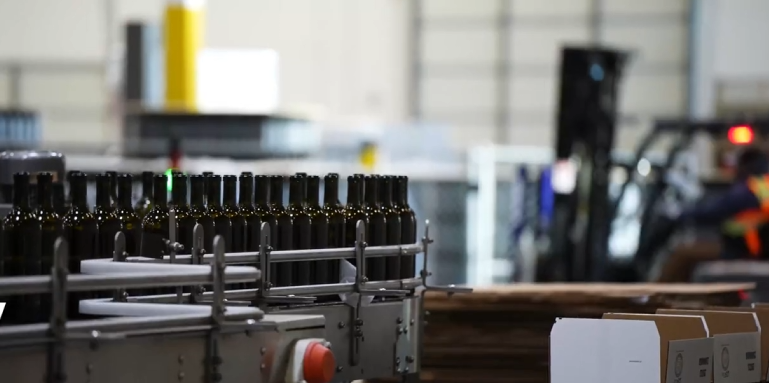
1. Production Capacity
Start here. A small winery producing 50,000 bottles per year has fundamentally different equipment needs than an industrial beverage plant running 20,000 bottles per hour.
- Small winery / craft brewery (under 5,000 units/day): semi-automatic or entry-level automatic lines; single-head or 4-head fillers; manageable labor input
- Mid-scale operation (5,000–50,000 units/day): fully automatic rotary systems; PLC-controlled; minimal operator intervention
- Industrial beverage plant (50,000+ units/day): high-speed rotary wine packing solution or beer can packaging line; integrated robotic handling; real-time data monitoring
Buying oversized equipment to “grow into” sounds prudent but ties up capital and creates maintenance complexity. Buying undersized equipment creates bottlenecks within 18 months. Match the line speed to your 3-year production forecast, not your current output.
2. Product Characteristics
Your liquid’s properties determine which wine packing solution or beer packaging solution is mechanically compatible.
Key variables:
- Carbonation level — even low-carbonation beers (1.5–2.0 vols CO₂) need isobaric handling
- Alcohol percentage — high-ABV products affect gasket compatibility and pump seal selection
- Oxygen sensitivity — wine, especially white and rosé, demands extremely low dissolved oxygen (DO) targets of under 50 ppb
- Viscosity — standard wine fills gravity; ports and dessert wines may require pump-assisted filling
- Particulates — wines with lees or hazy beers need wide-bore filling valves
3. Automation Level
Three tiers exist in any alcohol packaging line:
- Semi-automatic: Operator loads bottles, machine fills and caps. Low CapEx, high labor cost per unit.
- Fully automatic: Integrated conveyors, automated loading, PLC-controlled sequences. Higher upfront investment, lower per-unit cost at volume.
- Turnkey line integration: Complete end-to-end systems from depalletizing through robotic palletizing. Ideal for operations where downtime cost exceeds equipment cost.
The economics typically favor full automation at production volumes above 1,000 units per hour. Below that threshold, semi-automatic systems often deliver better ROI per dollar invested.
4. Packaging Type Strategy
Your packaging format isn’t just a technical choice — it’s a brand and market decision.
Ask yourself:
- Does your brand positioning demand glass? (Premium perception remains strongly tied to glass bottles in most wine markets.)
- Are you targeting export markets where shipping weight penalties make glass expensive?
- Do your sustainability goals require recyclable or lightweight alternatives?
- Is your target consumer buying at retail, foodservice, or outdoor/event channels?
A well-designed packaging format strategy often uses multiple formats simultaneously — glass for direct-to-consumer and retail premium tiers; bag-in-box or pouch for foodservice and export.
5. Budget and ROI
The sticker price of packaging equipment is rarely the true cost. Build your ROI model around:
- Initial investment: Machine purchase, installation, commissioning, and operator training
- Maintenance cost: Consumables (gaskets, valves, sensors), planned servicing, and spare parts inventory
- Labor reduction: How many headcount does the automation eliminate?
- Production efficiency increase: What’s the cost of your current downtime and rework rate?
- Yield improvement: Reducing fill-weight variance on a high-volume wine bottling line by 0.5% can save tens of thousands of dollars annually
ROI periods of 18–36 months are typical for mid-scale alcohol packaging line investments. Larger turnkey systems often achieve payback in 12–24 months through labor and waste reduction alone.
Complete Turnkey Alcohol Packing Line Integration
Standalone machines are fine. But a fully integrated turnkey alcohol packing line is a different animal.
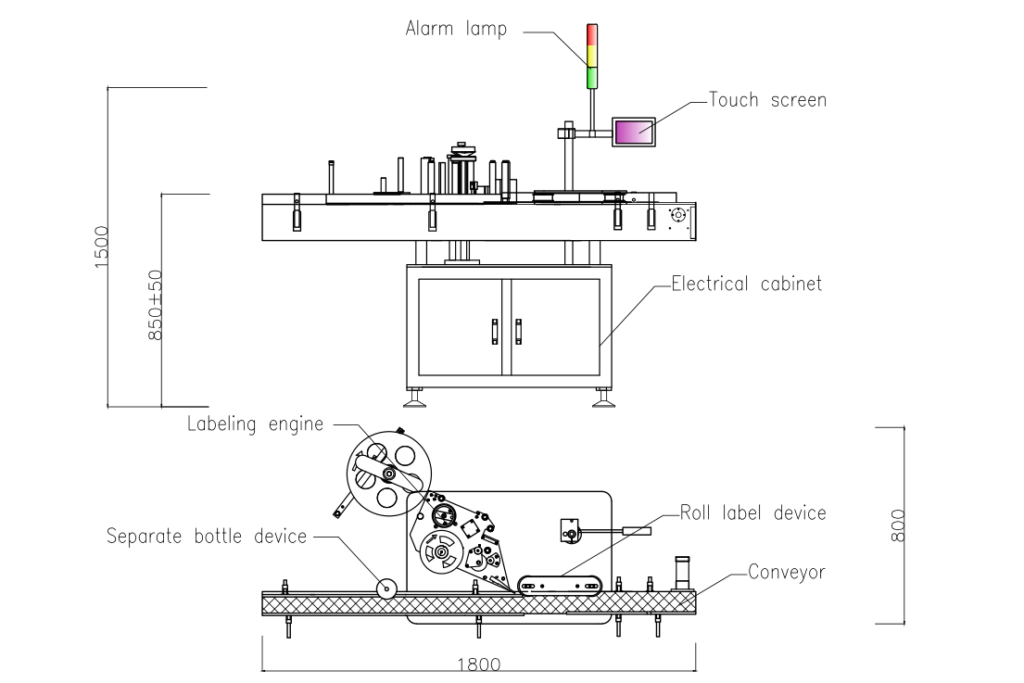
When every component is engineered to communicate — when the filler talks to the labeler which talks to the vision system which talks to the palletizer — you get something a collection of standalone machines never delivers: real-time production intelligence.
A complete turnkey alcohol packaging line includes:
- Conveyor systems — matched-speed transitions between stations to prevent bottle shock or jam
- CIP cleaning systems — automated internal cleaning between batches or product changeovers
- Vision inspection — camera systems checking fill level, cap presence, label placement, and code readability
- Leak detection — vacuum or pressure decay testing for seal integrity on every unit
- Robotic palletizing — consistent, high-speed layer formation without human ergonomic risk
- PLC centralized control — single HMI interface for the entire line with OEE reporting
The practical argument for turnkey: when something goes wrong on a standalone machine, it stops one station. When something goes wrong on an integrated turnkey line, the PLC catches it, isolates it, and alerts the operator before a minor issue becomes a major reject batch.
How Lintyco Supports Flexible and Liquid Packaging Expansion
If your operation includes or is expanding into flexible beverage packaging — spouted pouches, bag-in-box, or bulk liquid bags — there’s a technology bridge worth understanding.
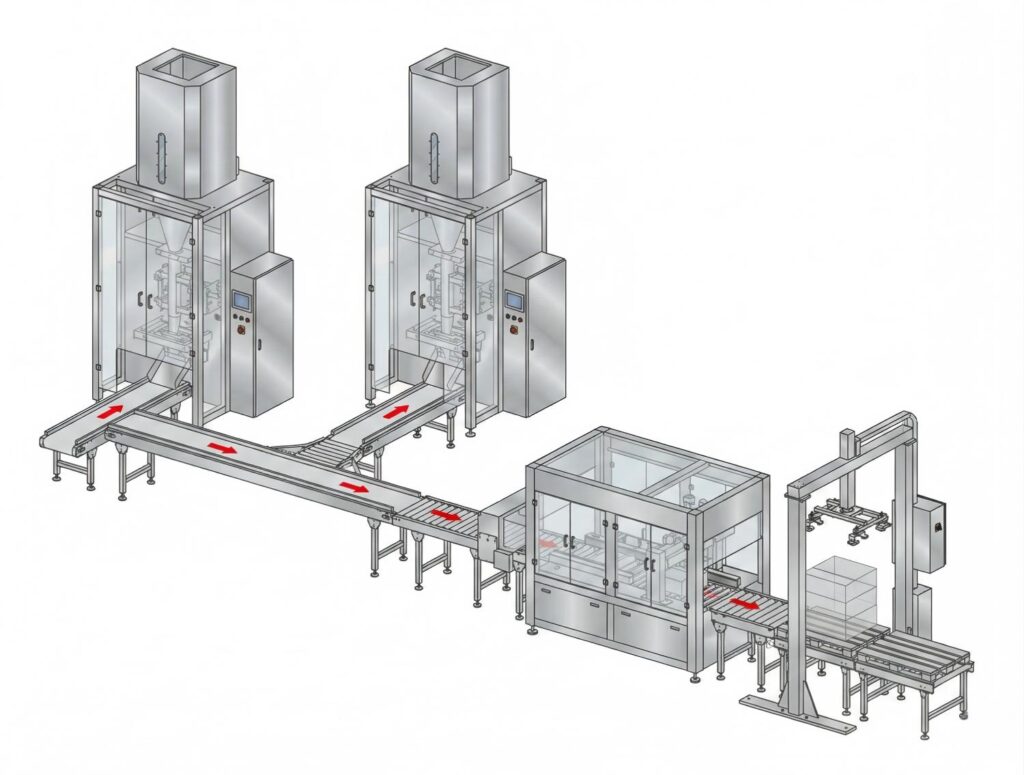
Lintyco’s engineering heritage is in pre-made pouch and liquid filling systems. Their rotary premade pouch filling machines run up to 80 bags per minute and support a range of spouted and stand-up formats with stainless steel food-grade construction. While their core product lineup covers liquid detergents, sauces, juices, and food liquids, the underlying technology — spouted bag filling under controlled atmosphere, nitrogen flushing, integrated seal inspection — translates directly to wine bag and beer pouch applications.
For beverage producers looking to add flexible formats without investing in a second standalone infrastructure, Lintyco’s liquid pouch filling machines and auxiliary automation equipment represent a practical entry point. Their integrated line design capability also supports expansion into the bag-in-box segment without requiring a completely separate production footprint.
This matters most for wineries and breweries that want to serve multiple channels — a restaurant supply arm running bag-in-box, a festival pouch line, and a premium glass bottle line — all within a manageable capital budget.
Future Trends in Wine and Beer Packaging
The alcohol packaging industry isn’t standing still. Here are the shifts that will affect your equipment decisions over the next 3–5 years:
- Lightweight aluminum cans — wall thickness has dropped 30% over the past decade, reducing material cost and carbon footprint per unit
- Sustainable glass reduction — lightweighting wine bottles (from 500g to 300g per bottle) is accelerating in Europe and Australia
- Flexible beverage packaging growth — stand-up pouch formats for wine and beer are growing at double-digit rates in export and convenience channels
- Smart QR traceability — inkjet-coded QR links to batch records, origin data, and consumer engagement tools are becoming standard in premium wine packing solution design
- Mobile canning services — contract mobile canning units bring the beer can packaging solution to small craft brewers without fixed-capital investment
The direction is clear: more format flexibility, less material waste, more data per unit. Equipment purchases made today should anticipate these requirements — or risk premature obsolescence.
Frequently Asked Questions
What is the best wine packing solution?
The best wine packing solution depends on your channel and production scale. Glass bottles remain the standard for premium retail. Bag-in-box is the preferred wine packing solution for foodservice, institutional supply, and export markets. Spouted pouches work well for event and convenience channels.
How does isobaric filling work in beer canning?
Isobaric filling works by pre-pressurizing the beer can or bottle with CO₂ to the same pressure as the liquid tank, before opening the filling valve. Because there’s no pressure differential across the liquid surface, CO₂ stays dissolved and foam formation is minimized during the fill cycle.
Can beer be packed in a stand-up pouch?
Yes. Beer stand-up pouch packaging requires spouted pouches made from high-barrier aluminum laminate film. The filling process uses adapted counter-pressure heads to maintain carbonation. Shelf life is shorter than cans — typically 3–6 months — but the format is ideal for outdoor, festival, and lightweight export use cases.
What is the difference between a wine bottling line and a beer bottling line?
The core difference is pressure management. A wine bottling line uses gravity or vacuum filling under inert gas atmosphere to protect against oxygen. A beer bottling line uses isobaric or counter-pressure filling to retain CO₂ carbonation. Both share similar downstream equipment — labeling, capping, case packing — but the filling and sealing technology is fundamentally different.
Is bag-in-box suitable for premium wine?
Increasingly, yes. Modern high-barrier bag-in-box formats maintain wine quality for up to 12 months unopened and 4–6 weeks after first use. Several premium wine brands in Australia, New Zealand, and Scandinavia now use bag-in-box as their primary export wine packing solution, citing lower logistics cost, better carbon footprint, and consumer convenience as key drivers.
Ready to Design Your Packaging Line?
Choosing the perfect wine packing solution — or beer packaging solution — starts with a clear view of your production requirements, your product characteristics, and your market strategy.
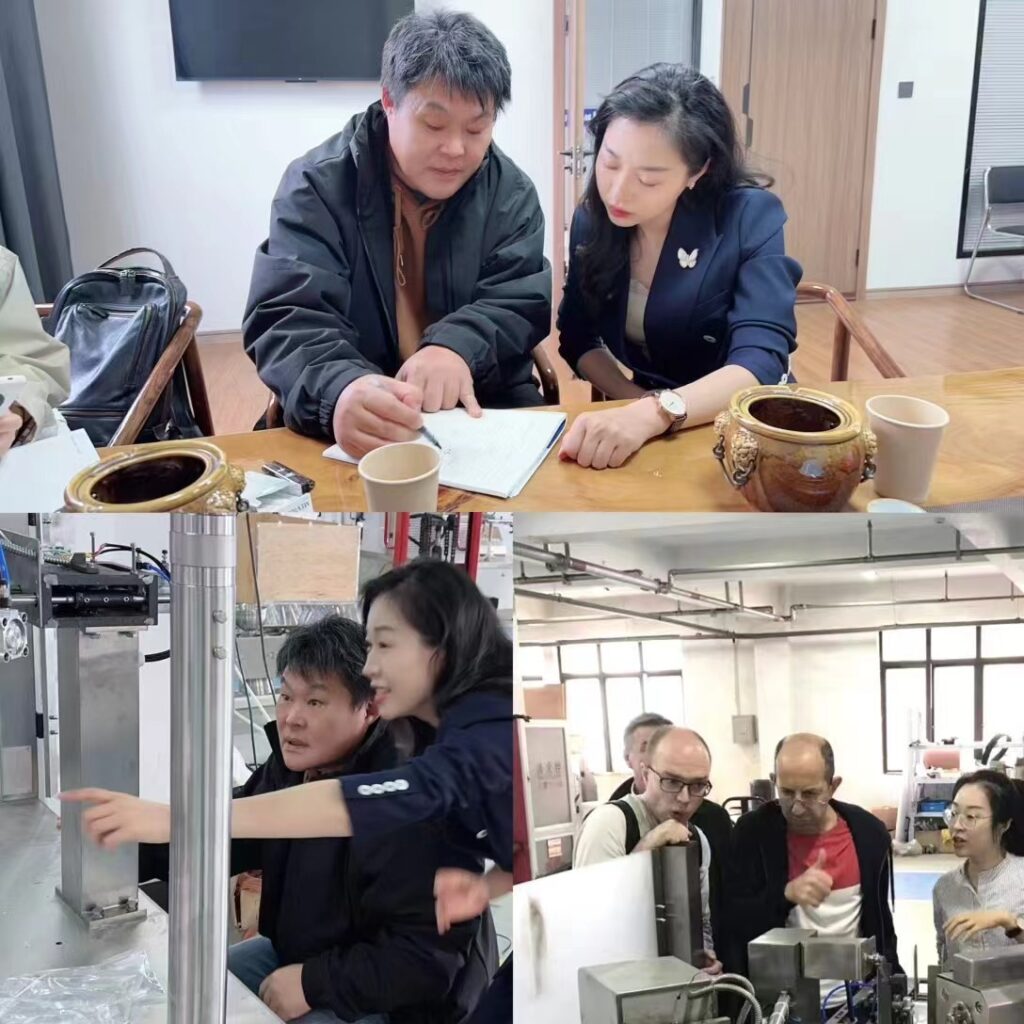
If you’re evaluating flexible beverage formats like spouted pouches or bag-in-box alongside traditional bottle lines, talk to the Lintyco team about how liquid pouch filling technology and integrated line design can support your expansion without unnecessary complexity or capital duplication.
The right line isn’t the most expensive one. It’s the one built for your product, your volume, and your next three years of growth.

 English
  Spanish
  Russian
  Korean
  French
  German
  Italian
  Arabic
  Thai
Thai  Chinese
  Vietnamese
  Japanese
  Portuguese
  Dutch
Dutch  Malay
Malay